
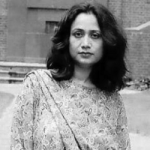
Early Life and Education
Born Syeda Parveen Bano into a Shia Syed family in Karachi, Pakistan, her parents had migrated from Lahiria Sarai in the Darbhanga district of Bihar (India) after Partition. Her father, Shakir Hussain (also a poet), influenced her literary inclinations. Nicknamed “Para” affectionately as a child, she showed early talent and began writing poetry in her teens, initially under the pen name “Beena.”
She excelled academically:
- Matriculation from Rizvia Girls School, Karachi.
- Intermediate and B.A. (Hons) in English from Sir Syed Girls College / Karachi University (1971).
- M.A. in English Literature (1972).
- Another master’s in Linguistics.
- Later, an M.A. in Bank Management.
She also earned distinctions and placed second in Pakistan’s Central Superior Services (CSS) examination in 1982.
Career
Parveen Shakir began as a teacher and lecturer in English literature. She later joined the Government of Pakistan as a civil servant in the Customs Service (now part of the Federal Board of Revenue), where she rose to senior positions. Balancing a demanding bureaucratic career with her literary pursuits, she remained deeply committed to poetry.
She was married to her cousin Dr. Syed Naseer Ali, with whom she had a son, Syed Murad Ali. The marriage ended in divorce, after which she became a pioneering single mother in her social circle, dedicating a poignant nazm to her son.
In 1990, she received Pakistan’s prestigious Pride of Performance award for her contributions to literature.
Literary Works
Her poetry collections include:
- Khushbu (Fragrance, 1976) — Her debut, which won the Adamjee Literary Award and brought her massive fame.
- Sad-barg (Marsh Marigold, 1980).
- Khud-kalaami (Soliloquy, 1990).
- Inkaar (Denial, 1990).
- Maah-e-Tamaam (Full Moon, 1994).
Her verses often featured innovative use of language, blending classical Urdu traditions with modern sensibilities.
Death
Tragically, on December 26, 1994, at the age of 42, Parveen Shakir died in a car accident in Islamabad. Her vehicle collided with a bus (or truck in some accounts) near Zero Point while she was heading to work. She was rushed to the hospital but succumbed to her injuries. The road where the accident occurred was later named Parveen Shakir Road in her honor. She is buried in H-8 Graveyard, Islamabad.
Her untimely death cut short a brilliant career, but her legacy endures. Parveen Shakir remains one of the most beloved and studied poets in Urdu literature, inspiring generations with her evocative, heartfelt expressions of emotion and womanhood.