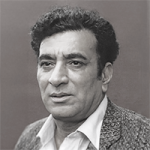
Ahmad Faraz (Urdu: احمد فراز), whose real name was Syed Ahmad Shah (سید احمد شاہ), was one of the most celebrated modern Urdu poets of the 20th century. He was known for his romantic ghazals, progressive and revolutionary themes, and bold criticism of authoritarianism.
Early Life and Education
Faraz was born on 14 January 1931 (some sources cite 12 January) in Nowshera or near Kohat, in what was then the North-West Frontier Province (now Khyber Pakhtunkhwa), British India. He belonged to a Pashtun-Syed family with Sufi roots; his ancestor was the 16th-century Sufi saint Haji Bahadur (Ali Abdullah Shah). His father, Agha Syed Muhammad Shah Bark Kohati (also referred to as Syed Muhammad Shah Barq), was a teacher and a poet who wrote in Persian. The family spoke Hindko at home, though Faraz developed a deep love for Urdu literature.
He received his early education in Kohat and Peshawar. He studied at Islamia College, Kohat, Edwards (Edwardes) College, Peshawar, and earned Master’s degrees in Urdu and Persian from Peshawar University. His father reportedly wanted him to pursue mathematics or science, but Faraz’s natural inclination was toward literature and poetry.
Literary Career
Faraz began writing poetry as a college student. He initially used the pen name Ahmad Shah Kohati, but later adopted Faraz (meaning “elevation” or “ascension”) on the advice of the legendary poet Faiz Ahmed Faiz. His first collection, Tanha Tanha, was published while he was still a student and received wide acclaim.
He started his professional life as a scriptwriter and producer at Radio Pakistan in Peshawar. He later taught Urdu at Islamia College and Peshawar University. In 1976, he became the founding Director General (later Chairman) of the Pakistan Academy of Letters, a premier literary institution. He also held important positions such as Director of Lok Virsa and Chairman of the National Book Foundation.
Faraz authored around 13–14 collections of poetry. Notable works include:
- Pas Andaaz Mausam
- Sab Awazain Meri Hain
- Khwaab Gul Pareshan Hain
- Janaan Janaan
- Ghazal Bahana Karoon
His style blended simplicity, emotional depth, and elegance. He drew inspiration from Mirza Ghalib, Faiz Ahmed Faiz, and progressive poets like Ali Sardar Jafri. Many of his ghazals became hugely popular through singers such as Mehdi Hassan, Ghulam Ali, Jagjit Singh, and others.
Political Activism and Exile
Faraz was not only a romantic poet but also a vocal critic of military dictatorships and social injustice. During General Zia-ul-Haq’s regime, his political poetry led to his imprisonment. One notable poem, “Professional Killers,” condemned extrajudicial killings. He faced censorship and eventually went into self-exile in Europe and Canada for several years (roughly 6 years in some accounts). He returned to Pakistan later.
His outspokenness sometimes led to professional repercussions, including removal from certain positions.
Awards and Recognition
Faraz received numerous prestigious awards for his literary contributions:
- Sitara-i-Imtiaz
- Hilal-i-Imtiaz (which he reportedly returned at one point in protest)
- Adam Jee Literary Award
- Abaseen Award
- Kamal-e-Fun Award
- International honors such as the Firaq International Award (India) and others
Posthumously, the Government of Pakistan awarded him the Hilal-e-Pakistan.
Personal Life and Death
Faraz had three sons, including Shibli Faraz (a politician and former federal minister). His brother, Syed Masood Kausar, served as Governor of Khyber Pakhtunkhwa.
He suffered from kidney failure in his later years. After a fall and treatment abroad, he returned to Pakistan and passed away on 25 August 2008 in Islamabad at the age of 77. He was buried in Islamabad.
Legacy
Ahmad Faraz remains immensely popular across South Asia for his ability to express love, longing, hope, and resistance in accessible yet profound language. His poetry continues to be sung, recited, and studied, bridging romanticism with progressive ideals. He is often ranked among the greatest Urdu poets of the modern era, alongside figures like Faiz Ahmed Faiz.
His work reflects both personal emotion and a commitment to justice, tolerance, and humanistic values rooted in his Sufi family background.