
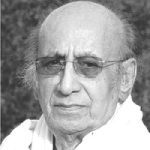
Nida Fazli (real name: Muqtida Hasan Nida Fazli) was one of the most prominent modern Indian poets, lyricists, and writers in Urdu and Hindi. He is celebrated for his simple yet profound poetry, ghazals, and film songs that often reflected themes of love, life, secularism, human emotions, and social realities with a unique, accessible style.
Early Life and Background
He was born on October 12, 1938, in Delhi, British India, into a Kashmiri Muslim family. His father, Murtaza Hasan (pen name: Dua Dabaivi), was himself an Urdu poet, and poetry was part of the family environment. Some sources mention his birth or early years linked to Gwalior, where he spent much of his childhood and received his education.
He grew up in a multicultural setting—born into a Muslim family, raised in a Hindu-majority area, and educated in a missionary school—which shaped his cosmopolitan and secular worldview.
During the Partition of India in 1947, much of his family migrated to Pakistan, but Nida Fazli chose to remain in India (some accounts note a later decision around the 1960s communal events in Gwalior). He completed his education in Gwalior and earned a Master’s degree in English literature.
Career and Contributions
Nida Fazli emerged as a significant voice in post-Progressive Urdu poetry. His work stood out for its lack of rigid ideological labels, blending simplicity, irony, and deep humanism. He became widely popular through mushairas (poetry recitals) and especially through his work in Bollywood as a lyricist and dialogue writer.
Some of his most famous film songs include:
- “Kabhi kisi ko mukammal jahan nahi milta” (from the film Ahista Ahista)
- “Hosh walon ko khabar kya”
- “Aa bhi jaa” and many others, often sung by legends like Jagjit Singh, Pankaj Udhas, and others.
He also wrote prose, essays, and dialogues for films.
His poetry collections include titles such as:
- Lafzon ka Pul
- Aankh aur Khwab ke Darmiyan
- Khoya Hua Sa Kuch
- Pahle Aisa Kab Hota Tha
- Shahr Tu Mere Saath Chal
He received several honors, including the Sahitya Akademi Award (1998) for Urdu, the Khusro Award, Maharashtra Urdu Academy award, and others.
Personal Life and Legacy
He was known for his strong commitment to secular values and composite Indian culture, often described as a modern-day Kabir in spirit. He refused to migrate despite family pressures and family ties across the border, choosing India as his home.
He had a daughter named Tehreer. Some relatives were also involved in literature or related fields.
Nida Fazli passed away on February 8, 2016, in Mumbai due to a heart attack, at the age of 77. Notably, this was on the birth anniversary of ghazal singer Jagjit Singh, with whom he had collaborated extensively.
His poetry continues to resonate widely in both Urdu and Hindi literary circles and popular culture for its emotional depth and timeless appeal.